
How many restrooms does a farm crew need?
Field sanitation rules under OSHA 1928.110 call for one facility per 20 hand-labor employees, reachable within a quarter mile walk or a five minute walk, whichever comes first. A small family operation near Casper might run one standard porta potty rental at the equipment yard. A bigger outfit with seasonal crews spread across several fields needs units staged at each work zone, not just one by the barn. Use our how many porta potties do I need guide to size it by headcount and acreage. Potable water has to be available too, under OSHA 1926.51(a)(1), so we pair units with a handwashing station rental or a simple portable sink rental at each staging point. For general sanitation counts on any worksite, not just farms, OSHA 1926.51(c) sets the seat-to-worker ratio construction crews follow, and it is a useful backstop if your operation also runs building projects alongside the fields. Bunkhouse crews staying overnight often want something closer to a real bathroom, which is where a restroom trailer rental earns its keep over a long harvest.
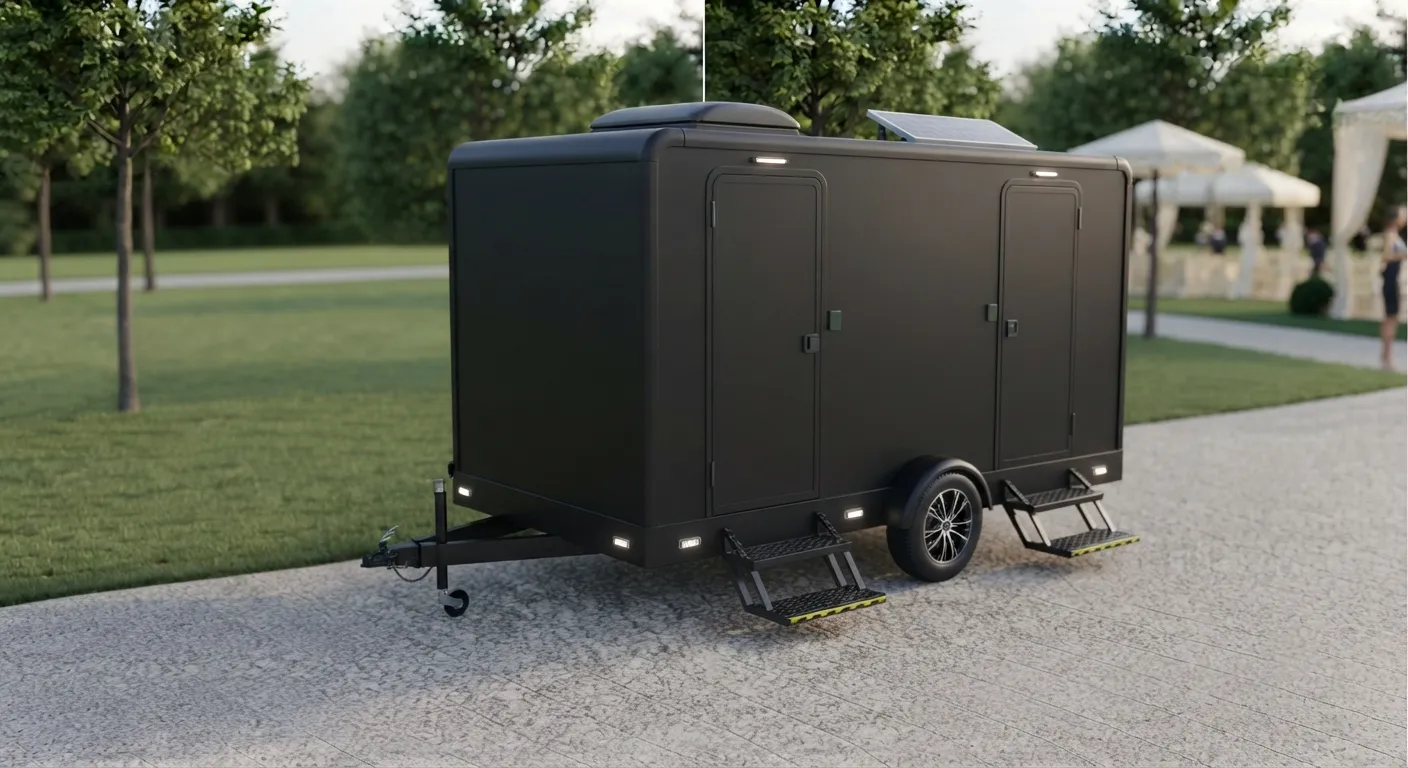
What kind of unit fits a working ranch?
Standard units handle the daily grind fine. Each one holds a 60 to 70 gallon tank and stands about 92 inches tall on a 44 by 48 inch footprint, small enough to tuck beside a loading chute or fence line without blocking equipment. For crews that want a flush and a sink between shifts, the deluxe flushable porta potty runs $150 to $290 a week. If county fair season or a branding weekend brings in visitors, an ADA accessible porta potty keeps you compliant with ADA Standards 213.2, which requires at least one accessible unit in any cluster, and ADA Standards 304.3.1, which calls for a 60 inch turning circle inside. Ranches running a bunkhouse or hosting agritourism events sometimes skip individual units entirely and go with a 4 stall restroom trailer instead, since it covers a whole crew without a line forming at branding time. We also handle septic on working farms: a septic pumping service for the main house tank, and grease trap pumping if you're running a farm stand kitchen or processing shed. A typical 1,000 gallon residential septic tank gets pumped every 3 to 5 years depending on household size, so check our how often to pump a septic tank page before it backs up during calving season.
Where do units go on a large property with no address?
Gate codes, cattle guards and section lines replace street addresses on most Casper-area ranches, so we ask for the nearest crossroad and a description of the turn-in instead. Delivery trucks need roughly 60 feet of straight clearance to spot a unit or swap a tank, which matters on a two-track lane as much as a paved lot. Placement near Casper follows the same logic whether you're 4.8 miles out toward Hartrandt or 6.8 miles the other direction near Brookhurst: keep the unit on stable, level ground per ADA Standards 302.1 if it needs to be accessible, and keep the door swing clear of fence posts and irrigation lines. Farms closer to town, inside city limits, sometimes need placement checked against local rules; that's not something to guess at, so confirm right-of-way or setback questions with the City of Casper before delivery day if the unit sits near a public road. Our porta potty placement guide covers ground stability and clearance in more detail, and porta potty permit requirements walks through what to check locally. Ranches near Red Butte or Vista West, both under 7 miles from Casper, get the same delivery window as in-town jobs.
| service | duration | typical price |
|---|---|---|
| standard unit | week | $200 |
| standard unit | month | $200 |
| deluxe flushable | week | $250 |
| ADA accessible | week | $185 |
| septic pumping | day | $250 |
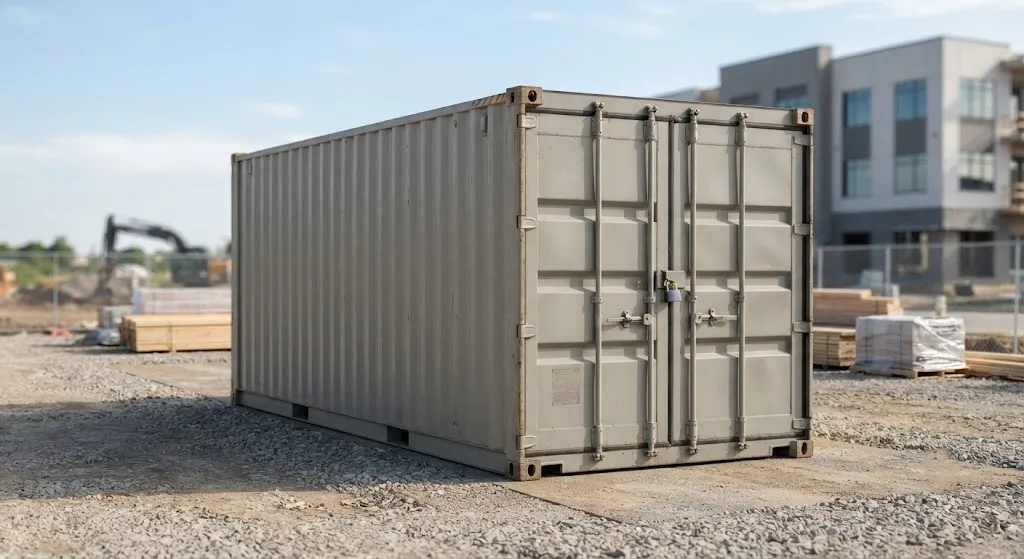
Weekend rates for a single roundup or branding event run higher than a weekly farm rental, so tell us upfront if it's a one-day gathering versus a season-long placement. For fencing off equipment yards or livestock pens during a big event, a temporary fence rental or chain link temporary fence pairs well with the restroom order. Roll-off needs during a barn cleanout or fence teardown are covered under roll-off dumpster rental, and a storage container rental works for seasonal tool and feed storage between deliveries.
Frequently asked questions
Do you deliver to properties without a street address?
Yes. We work off crossroads, gate codes and landmark descriptions constantly for Casper-area ranches. Give us the nearest paved road, the turn direction and any locked gate combination, and we'll confirm the route before the truck leaves. Long driveways and two-track lanes are normal for us.
How often does a farm restroom get serviced?
Weekly service covers up to 10 users over a standard 40 hour week, per the ANSI/PSAI Z4.3 baseline interval. Bigger crews or hot summer stretches may need twice-weekly visits. Tell us your headcount and we'll set the schedule before delivery, then adjust it once harvest ramps up.
Can I rent just one unit for a small family farm?
Yes, plenty of smaller operations do exactly that. One standard porta potty rental near the equipment yard or barn covers a crew of a few hand-labor workers under OSHA 1928.110's ratio. Add a handwashing station if the crew handles produce or livestock feed directly.
What happens to units in winter weather?
Cold weather changes servicing and placement, especially with freezing tanks and icy ground. Our porta potty in winter guide covers antifreeze treatment and site selection. Wyoming winters on open range hit hard, so we plan routes and tank treatment before the first freeze, not after.
Do you handle both restrooms and septic on the same ranch visit?
Often, yes. Many ranch calls combine a restroom drop with a septic tank check on the main house, since our trucks are already on-site. Ask about bundling a septic tank cleaning visit with your restroom delivery to save a trip and keep both systems running through the season.
Next step
Get a delivery date
Tell us the address, the dates and the headcount. We size the order and confirm the route.