
Where Should a Porta Potty Go on a Job Site or Yard?
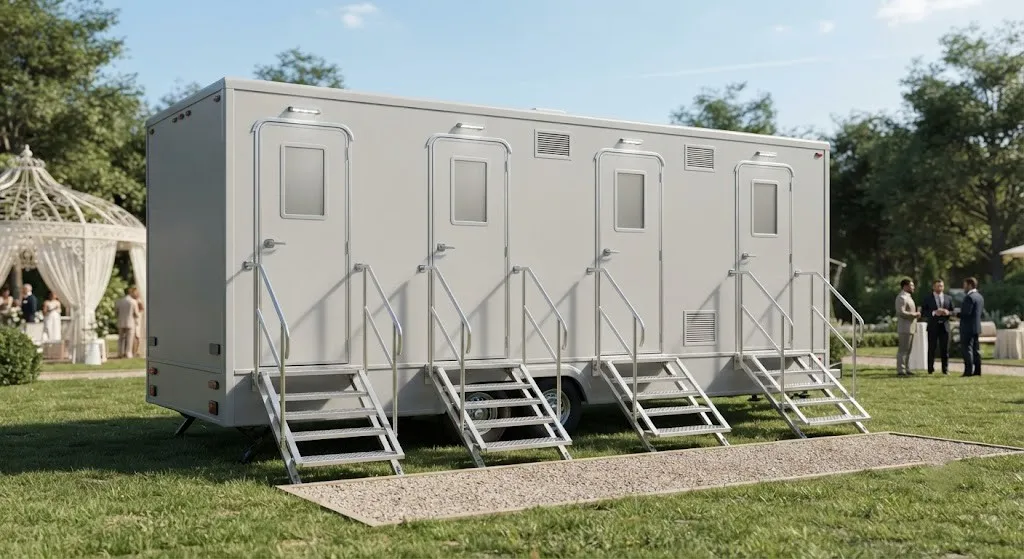
Pick level, firm ground first. A standard porta potty rental needs about 44 by 48 inches of footprint and stands roughly 92 inches tall, so overhead branches and low eaves matter as much as the ground under it. ADA Standards section 302.1 calls for stable, firm, slip-resistant surfaces, which rules out soft grass after rain or loose gravel that shifts. Keep the unit within reach of the pump truck; our drivers need clear access to service the tank without threading between parked equipment. On a construction site, place units near the work zone but outside foot traffic patterns, and never on a slope that could tip the tank. If you are placing an ADA accessible porta potty, you need a 60 inch turning circle per ADA Standards section 304.3.1, plus a route at least 36 inches wide under ADA Standards section 403.5.1. For events pulling from Casper and nearby communities like Hartrandt, about 4.8 miles northwest, or Mountain View, about 6.8 miles northwest, plan drop points along the natural flow of foot traffic instead of clustering everything at one entrance. Our porta potty rental checklist walks through the full site-prep list before delivery day.
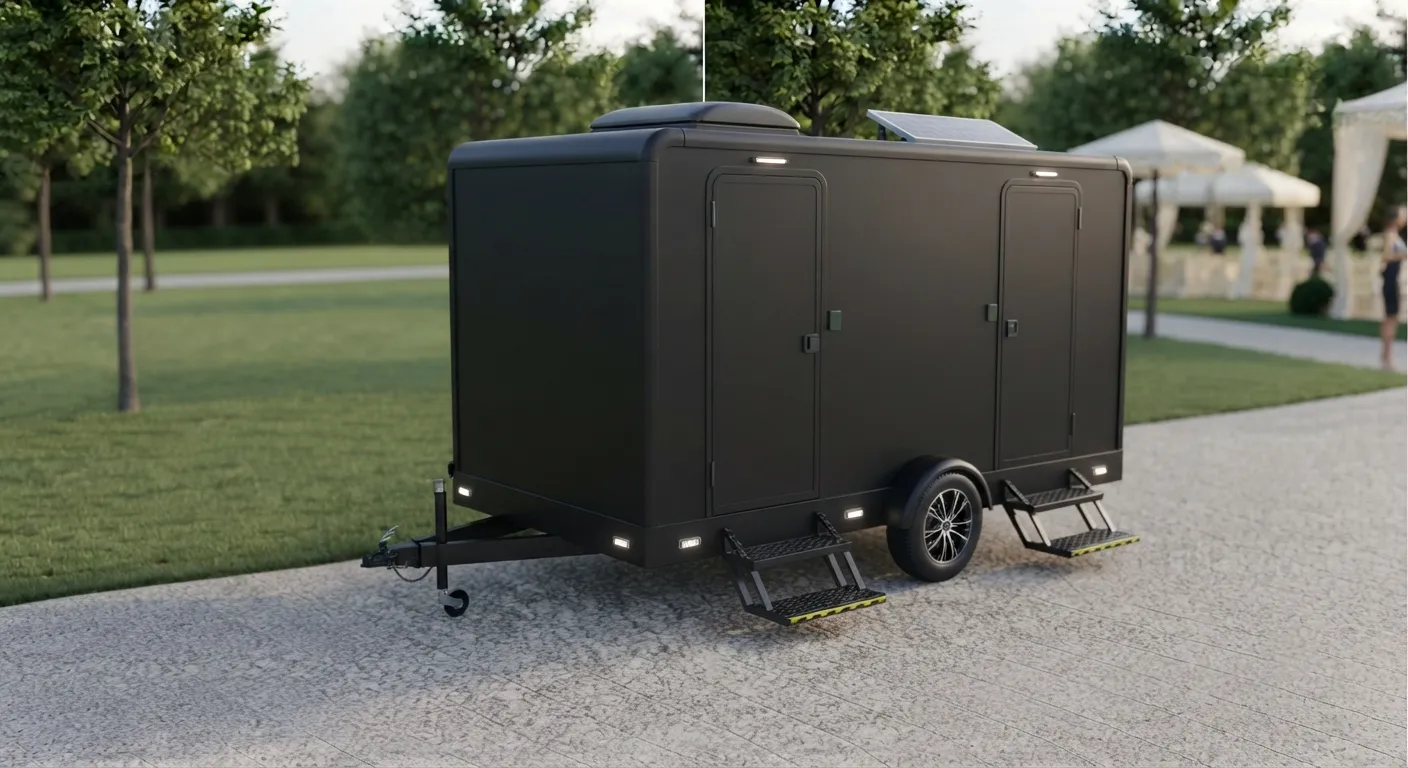
Do I Need a Permit to Place a Porta Potty in Casper?
Some placements need sign-off, especially anything touching a sidewalk, street shoulder or public right of way. That rule is not confirmed here, so check with the City of Casper before you commit to a spot near the curb. The same caution applies to a dumpster placement permit if a roll-off dumpster rental is going in the same footprint; dumpster placement permit cost and rules vary by exactly where the container sits, and our dumpster permit requirements page covers what to ask the city. If you are renting for private property only, driveway, backyard, or a fenced construction lot, permitting is usually simpler, but confirm before delivery rather than after. Our porta potty permit requirements guide and our service areas page both point you toward what to verify locally. For jobs near Red Butte, about 6.7 miles southwest, or Brookhurst, about 6.8 miles east, the same right-of-way caution applies even though those are outside city limits, since county rules differ too.
How Many Units and What Spacing Does OSHA Require?
OSHA 1926.51(c)(1) sets the ratio for construction sites: one toilet for 20 workers or fewer, then one toilet and one urinal per 40 workers once you pass 20, dropping to one per 50 at 200 or more workers. Spacing itself is not spelled out in the standard, but ANSI/PSAI Z4.3 assumes a servicing interval of once weekly for up to 10 users across a 40 hour week, which means placement has to leave room for a service truck to reach every unit on that schedule. OSHA 1926.51(a)(1) also requires an adequate supply of potable water on site, which is why many crews pair units with a handwashing station rental or a portable sink rental rather than relying on one tap. If your crew is spraying paint, coatings, herbicides or insecticides, OSHA 1926.51(f)(1) requires washing facilities nearby, not just hand sanitizer; 29 CFR 1910.141(d)2) is explicit that sanitizer does not satisfy a washing requirement, soap and towels or a dryer do. Farm crews doing hand labor fall under OSHA 1928.110 instead, which calls for one facility per 20 workers within a quarter mile walk, useful to know for farm and agricultural restrooms around Casper.
Where Do Dumpsters, Storage Containers and Fencing Belong on the Same Site?
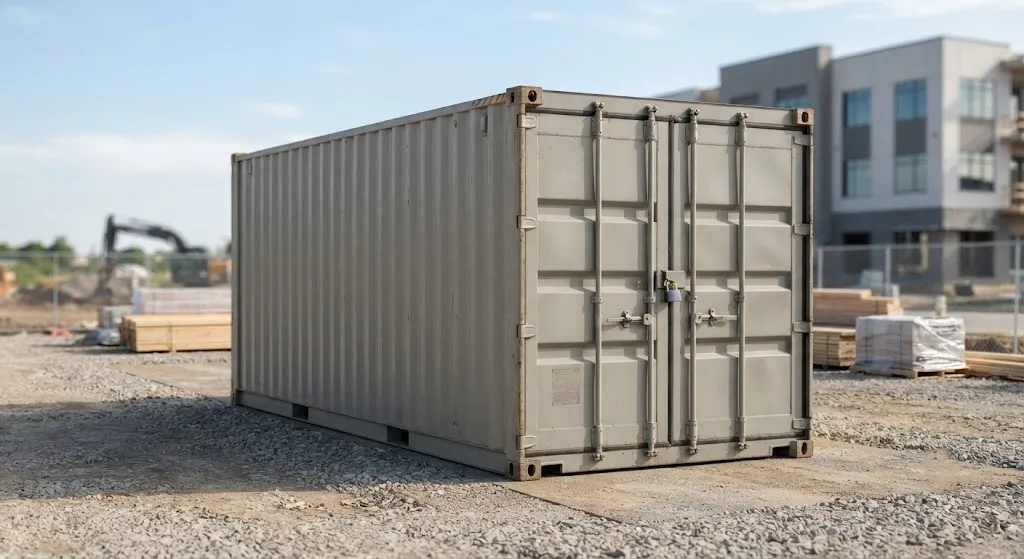
Placement rules stack up fast once you add a dumpster, a container and fencing to the same lot. A roll-off truck needs about 60 feet of straight clearance behind it to set the container down, so leave that lane open before the truck shows up; check sizing on our dumpster sizes and dimensions page. Keep the dumpster clear of what cannot go in a dumpster, since paint cans and certain debris change disposal rules; see what cannot go in a dumpster for specifics. Storage container rental units, including 20ft storage container and 40ft storage container sizes, need the same flat, reachable ground as a porta potty. A mobile office trailer rental with mobile office trailer replacement doors on hand is worth planning for if the site sees heavy equipment traffic that might clip a door. Wrap the whole layout with temporary fence rental or chain link temporary fence to keep the public out of the work zone, following OSHA 1926.202 barricade guidance where the fence line meets a public walkway.
Frequently asked questions
How far from a building should a porta potty sit?
Keep it close enough for foot traffic but off any accessible route narrower than 36 inches, per ADA Standards section 403.5.1. Avoid doorways, downspouts and low windows. A few feet of clear ground on the service side matters more than exact distance from the structure itself.
Can a porta potty go on a septic system's drain field?
No. Avoid placing units, dumpsters or heavy equipment over a septic drain field or tank lid. If your Casper property is due for service, a septic pumping service or septic tank cleaning crew needs clear access, and a typical residential tank gets pumped every 3 to 5 years.
What happens if a unit is placed on soft or sloped ground?
It can tip, and the door swing may bind. Firm, level ground matters under ADA Standards section 302.1. If the site has no good flat spot, ask about a placement consult before delivery; a wrong spot on day one means a costly reset later.
Do I need a permit for a dumpster and a porta potty at the same address?
Possibly, and it depends on the exact placement relative to the street and sidewalk. Confirm with the City of Casper before delivery. Our team can flag likely permit triggers during scheduling, but the final answer comes from the city, not from us.
How much clearance does a service truck need to reach the unit?
Roughly 60 feet of straight clearance works for a roll-off; porta potty pump trucks need less but still want an unobstructed path with no parked cars or piled material blocking the route on service day.
Next step
Get a delivery date
Tell us the address, the dates and the headcount. We size the order and confirm the route.