How does a standard porta potty actually work?
There is no water line and no sewer connection. The tank underneath holds waste, and a chemical packet, usually a blue deodorizer, breaks down solids and knocks back odor between services. A standard porta potty rental stands about 92 inches tall and measures roughly 44 by 48 inches on the ground, small enough to tuck against a fence line or a building wall. Foot pumps or hand sanitizer dispensers sit inside on nicer units. For a construction worker running to a porta potty between concrete pours, the whole point is speed: no line, no wait, no walk back to a job trailer. Casper Porta Pros sets service intervals based on headcount, and OSHA 1926.51(c) sets the baseline: one toilet for 20 workers or fewer on a construction site, scaling up from there. If you are trying to size a crew's needs before bid day, the how many porta potties do I need guide walks through the math, and OSHA portable toilet requirements covers the ratio in full.
How do flushable porta potties work?
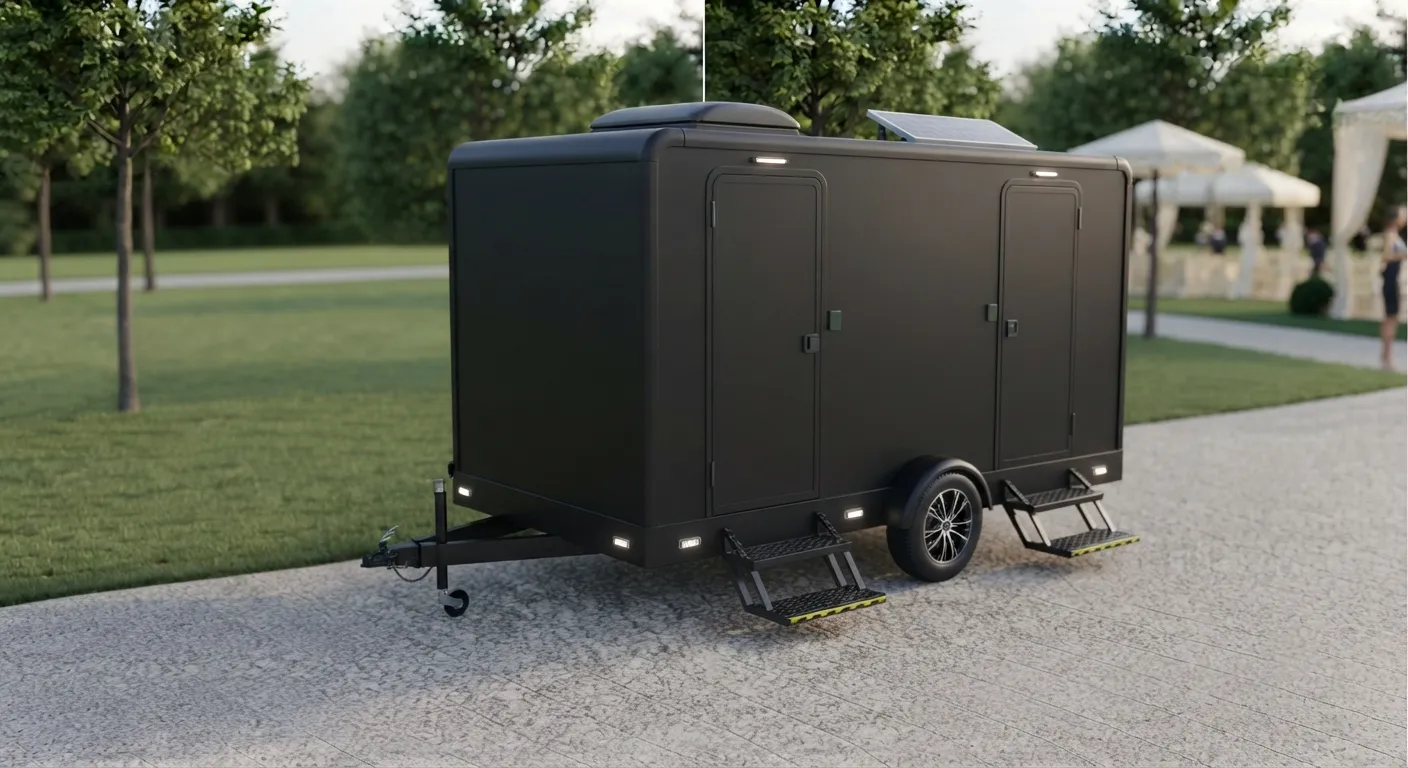
A deluxe flushable porta potty uses a small onboard freshwater tank and a foot pump or hand lever to push a measured rinse through the bowl after each use, dropping waste into a separate holding tank below. It feels closer to a real bathroom: less splash-back, less odor carryover, and usually a hand wash station built into the unit. These run higher than a standard rental, and pricing depends on whether you need it for a day or a full week. An ADA accessible porta potty uses the same flush mechanism but adds a 60 inch turning circle per ADA Standards 304.3.1 and a 32 inch clear door opening per ADA Standards 404.2.3, so a wheelchair user can get in, turn around, and get out without backing down a ramp. Where units are clustered on one site, ADA Standards 213.2 requires at least 5 percent to be accessible, never fewer than one. Casper event organizers booking for a wedding or fairground crowd should check the ADA restroom requirements page before finalizing a headcount.
| unit | day | week | month |
|---|---|---|---|
| standard | $100-$350 | $130-$500 | $125-$325 |
| deluxe | $85-$1,200 | $150-$290 | -- |
| ada | $200-$400 | -- | -- |
Full local pricing, including delivery fees, lives on the porta potty rental cost and porta potty rental per day pages. For jobs running a season, monthly porta potty rental is worth pricing out instead of renewing weekly.
How does a portable sink work on a job site?
A portable sink rental or handwashing station rental carries its own freshwater supply, usually gravity-fed or foot-pump pressurized, plus a greywater tank underneath to catch runoff. No hose bib, no drain tie-in. OSHA 1926.51(a)(1) requires an adequate supply of potable water at any place of employment, and 29 CFR 1910.141(d)(2) is specific that soap and towels, or a hand-drying device, have to be present. Hand sanitizer alone does not satisfy that standard. Where workers are applying paints, coatings, herbicides or insecticides, OSHA 1926.51(f)(1) kicks in as a separate washing requirement tied to those contaminants specifically. For farm crews doing hand labor, OSHA 1928.110 sets a different bar: one facility per 20 employees, reachable within a quarter mile walk. Casper Porta Pros stocks stations for both job sites and events, and if sanitizer-only setups are being considered instead, the hand sanitizer station rental page explains where that does and does not meet code. General handwashing rule specifics are covered on handwashing station requirements.
Do camping porta potties work the same way?
Mostly, yes, with a smaller footprint. A camping or event unit uses the same sealed tank and chemical deodorizer system as a job site unit, just placed on softer ground and serviced less frequently if turnout is light. ANSI/PSAI Z4.3 sets the baseline service interval at once per week for up to 10 users across a 40 hour week, which is why weekend festivals in Casper often only need a single visit before and after. For county fairgrounds or river camping near Mountain View, 6.8 miles northwest of Casper, or out toward Red Butte, 6.7 miles southwest, placement on level ground matters more than tank size. ADA Standards 302.1 calls for stable, firm, slip-resistant footing, which is why crews avoid setting units directly on loose gravel or soft mud. Weekend rentals for standard units run in the $125 to $400 range depending on unit count and delivery distance. See the event restroom rental and camping porta potty pages for setups sized to a specific headcount.
Frequently asked questions
What chemical do porta potties use?
Most units run a blue deodorizing chemical, a biocide-based treatment that breaks down waste and masks odor between services. It is not something a renter refills. Casper Porta Pros handles chemical dosing at every scheduled service stop, so there is nothing for the customer to buy or top off themselves.
How often does a porta potty get serviced?
Weekly is standard for most job sites and long events, based on the ANSI/PSAI Z4.3 baseline of one visit per week per 10 users. High-traffic events or larger crews often need two or three visits weekly. See how often are porta potties cleaned for interval details by use case.
Can a porta potty freeze in winter?
Yes, standing water and holding tank contents can freeze in a hard Wyoming cold snap. Casper Porta Pros adjusts chemical mix and service frequency for winter jobs. Full detail on cold-weather setup is on the porta potty in winter page.
Do porta potties smell if serviced on schedule?
Not much. Odor control depends on the chemical treatment and the vent stack pulling air up and out, away from the seating area. Skipping a scheduled service is the most common cause of smell complaints. More on this at do porta potties smell.
Is a septic tank cleaning chemical the same as porta potty chemical?
No. Porta potty chemical treats a small sealed tank between service visits, while septic tank cleaning chemicals and additives are marketed for larger in-ground systems. A residential septic tank is typically pumped every 3 to 5 years regardless of additive use. See septic tank cleaning for how that service works.
Next step
Get a delivery date
Tell us the address, the dates and the headcount. We size the order and confirm the route.